




TL;DR
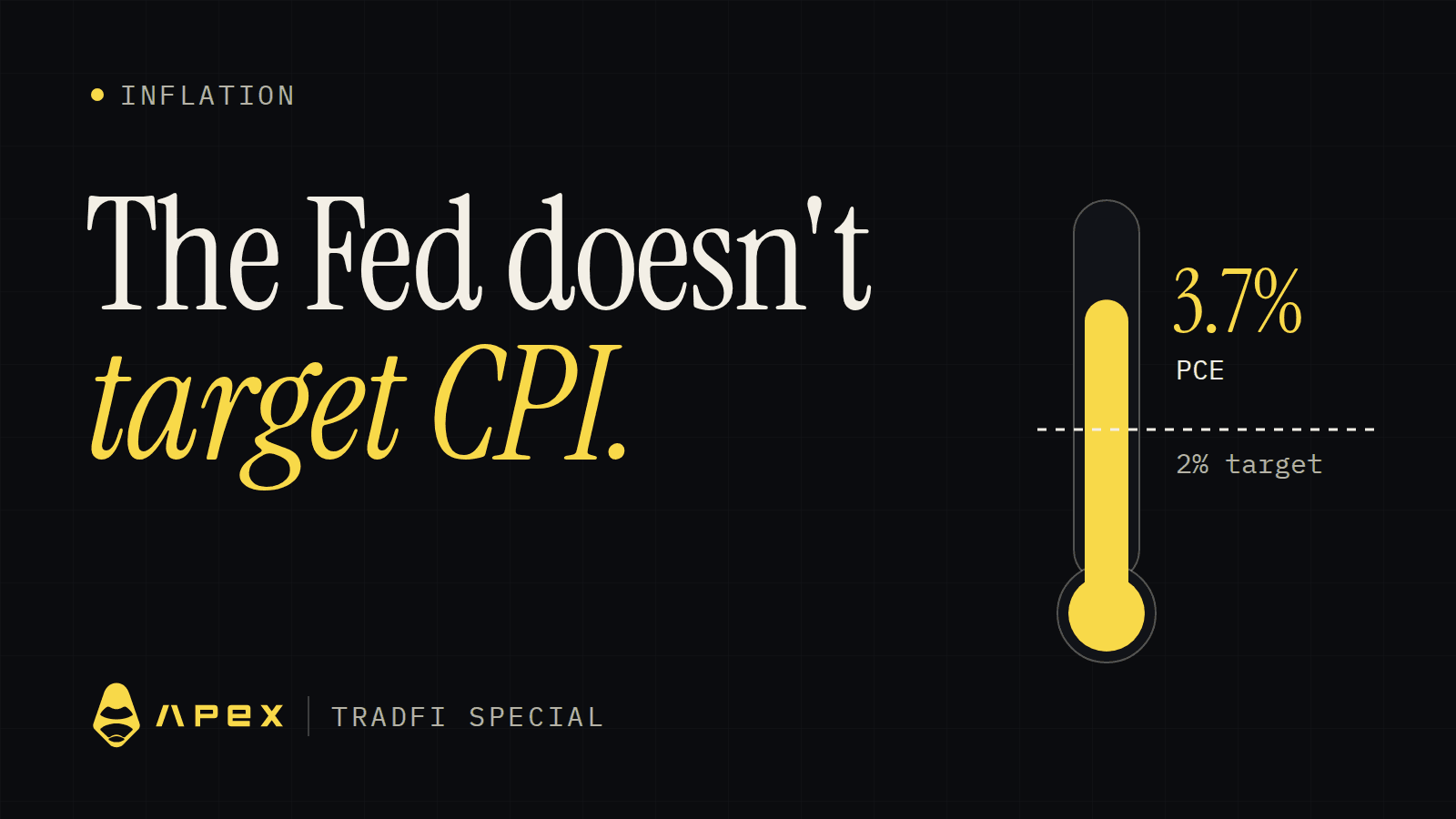
The inflation number in most headlines is CPI. The one the Fed aims at is PCE. In July 2026 it read 3.7%, against a 2% target.
Inflation works like a tax on cash, savings and dollar stablecoins. PCE is the Fed's own measure of that tax.
Gold, silver, stocks and crypto often move within minutes of a PCE release. What moves them is the surprise, not the number.
The number most people don't watch
Ask most people how fast prices are rising, and they'll quote CPI, the Consumer Price Index. It's the number on the news.
But when the US Federal Reserve sets interest rates, its 2% goal is written in a different measure: the PCE price index. PCE stands for personal consumption expenditures, which just means what people spend on.
In July 2026, PCE prices were up 3.7% from a year earlier. That's nearly double the target. On September 16, the Fed raised rates for the first time since 2023.
So if you want to guess what the Fed does next, PCE is the number it's grading itself on.
Basket vs. cart
Both CPI and PCE track what things cost. They just count differently.
Think of CPI as a fixed shopping list. It prices the same basket, month after month. PCE is more like watching what's actually in people's carts. If beef gets expensive and shoppers switch to chicken, PCE notices the switch.
PCE also counts spending made for you, not just by you, like the health insurance an employer pays for. And it gives housing a smaller share than CPI does.
That's why the two rarely match. It's also why a hot CPI print doesn't always mean a hot PCE print.
Why it matters to your money
Here's the part that hits your wallet. When prices rise, money that sits still buys less.
By the CPI measure, US prices rose about 30% from January 2020 to August 2026. A $100 bill kept in a drawer since then now buys what $77 bought. Nobody sent a bill for the missing $23. That's why economists call inflation a tax nobody votes on.
It lands on some people more than others:
Who pays: cash holders, savers and anyone holding a dollar stablecoin. A stablecoin holds dollars, so it shrinks with US prices wherever you live. Plain stablecoins pay nothing by default.
Who collects: borrowers with fixed-rate debt, above all governments, and stablecoin issuers, who earn interest on the Treasury bills behind your coins.
PCE is the Fed's yardstick for this tax. When PCE runs hot, the Fed is more likely to keep rates high or raise them.
Why gold, silver and stocks react
Markets don't move on the number itself. They move on the gap between the number and what traders expected.
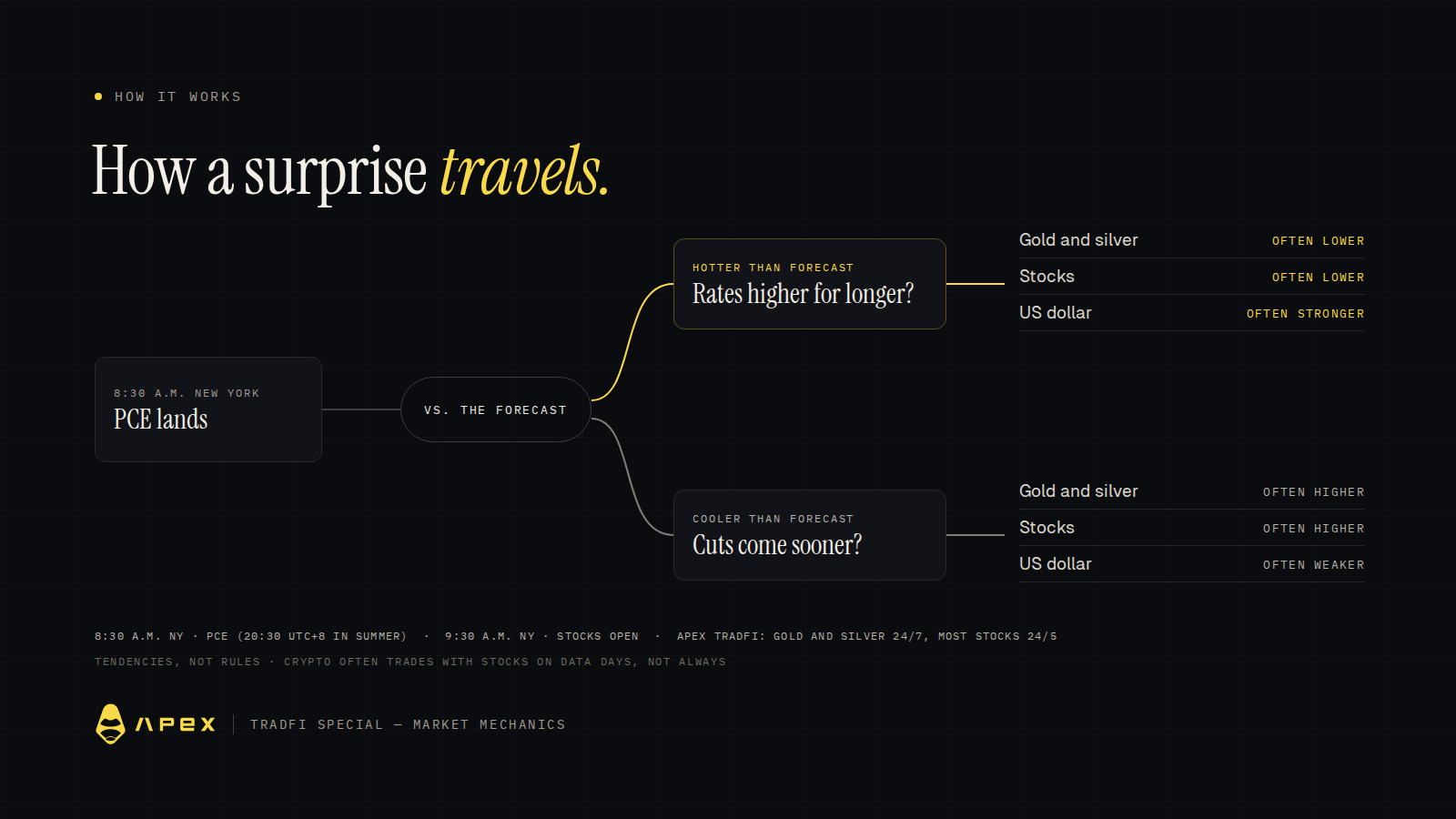
Before each release, forecasters publish an estimate. If PCE comes in hotter, traders may expect higher rates for longer. If it comes in cooler, they may expect cuts sooner. That shift can ripple out within minutes:
Gold and silver pay no interest. When rates are expected to rise, holding them costs more in lost interest, and they're priced in dollars, which can strengthen.
Stocks are worth their future profits. Higher rates make those future profits worth less today.
Crypto often trades with other risk assets on data days, though not every time.
These are tendencies, not rules. In 2022, the year US inflation hit a 40-year high, bitcoin fell about 64% and gold was roughly flat.
A worked example
Say you open a $2,000 gold position with $200 of your own money. That's 10x leverage. Before fees:
Gold moves | At 10x ($200 margin) | At 50x ($40 margin) |
Up 1% | +$20 (10% of margin) | +$20 (50% of margin) |
Down 1% | −$20 (10% of margin) | −$20 (50% of margin) |
Down 2% | −$40 (20% of margin) | −$40 (all of it) |
The dollar swing is the same. What changes is how much of your margin it eats. At 50x, a 2% move against you wipes out the whole margin, and liquidation hits even sooner. A data release can move that much in minutes.
Go deeper
Formula. CPI uses a fixed basket, updated from time to time. PCE uses a chained formula that updates weights as spending shifts. That's how it picks up the beef-to-chicken switch.
Core PCE. Core leaves out food and energy, which jump around. In July 2026, core PCE was up 3.3% from a year earlier. The Fed watches core for the trend and headline for the target.
The past can change. Once a year, usually in late September, the Bureau of Economic Analysis runs a yearly update. New numbers arrive with revised history, so earlier months can shift too.
Timing. PCE comes out at 8:30 a.m. New York time, an hour before the stock market opens. The first reaction happens in thin early trading.
Real returns. Your real return is your gain minus inflation. A 5% gain with 3.7% inflation is only about 1.3% more buying power.
What this means for traders
Know the time where you are. PCE lands at 8:30 a.m. New York time. That's 20:30 in Singapore and Hong Kong (UTC+8) while New York is on summer time, and 21:30 in winter.
Trade the surprise, not the headline. Check the forecast before the release, and check core too.
Expect wide swings in the first minutes. Prices can jump both ways before they settle.
Size for the worst minute. Leverage that feels fine on a quiet day can get liquidated on data day.
Check what idle cash earns. If it's zero, you're paying the inflation tax on that balance.
Live now on ApeX: TradFi Showdown
ApeX's TradFi section lists perpetual futures on gold, silver, oil and US stocks, priced by Chainlink oracle feeds. Gold, silver and the CLUSDT oil contract trade 24/7. Most stock pairs trade 24/5, so they're open when PCE lands before Wall Street wakes up. TradFi has its own balance, funded by a transfer. Up to 50x leverage, no KYC, self-custody. This week: August PCE lands on Wed Sep 30 at 8:30 a.m. New York (20:30 UTC+8), along with the yearly revision.
• Runs until Oct 3, 08:00 UTC. Registration required.
• Trade $5,000, $20,000 or $50,000 in TradFi volume to earn a $5, $15 or $30 TradFi Trading Bonus. Tiers don't stack.
• 3,000 USDT pool, first come, first served.
Glossary
Inflation: a general rise in prices, so each unit of money buys less.
CPI (Consumer Price Index): the main US measure of prices for a fixed basket of everyday goods and services.
PCE price index: a US measure of prices for what households buy and what's bought for them. The Fed's 2% target uses it.
Core PCE: PCE without food and energy.
Real return: your return after subtracting inflation.
Stablecoin: a crypto token designed to hold a steady value, usually $1.
Treasury bill: a short-term loan to the US government that pays interest.
Leverage: trading a bigger position than your own money covers, which grows gains and losses alike.
Margin: the money you put up to open a leveraged position.
Liquidation: when a leveraged position is closed automatically because losses have used up the margin.
This article is for education only and is not financial advice. Trading perpetual futures with leverage carries a high risk of loss, including your full margin. Stablecoins can lose their peg, and no asset is a guaranteed hedge against inflation. Do your own research.